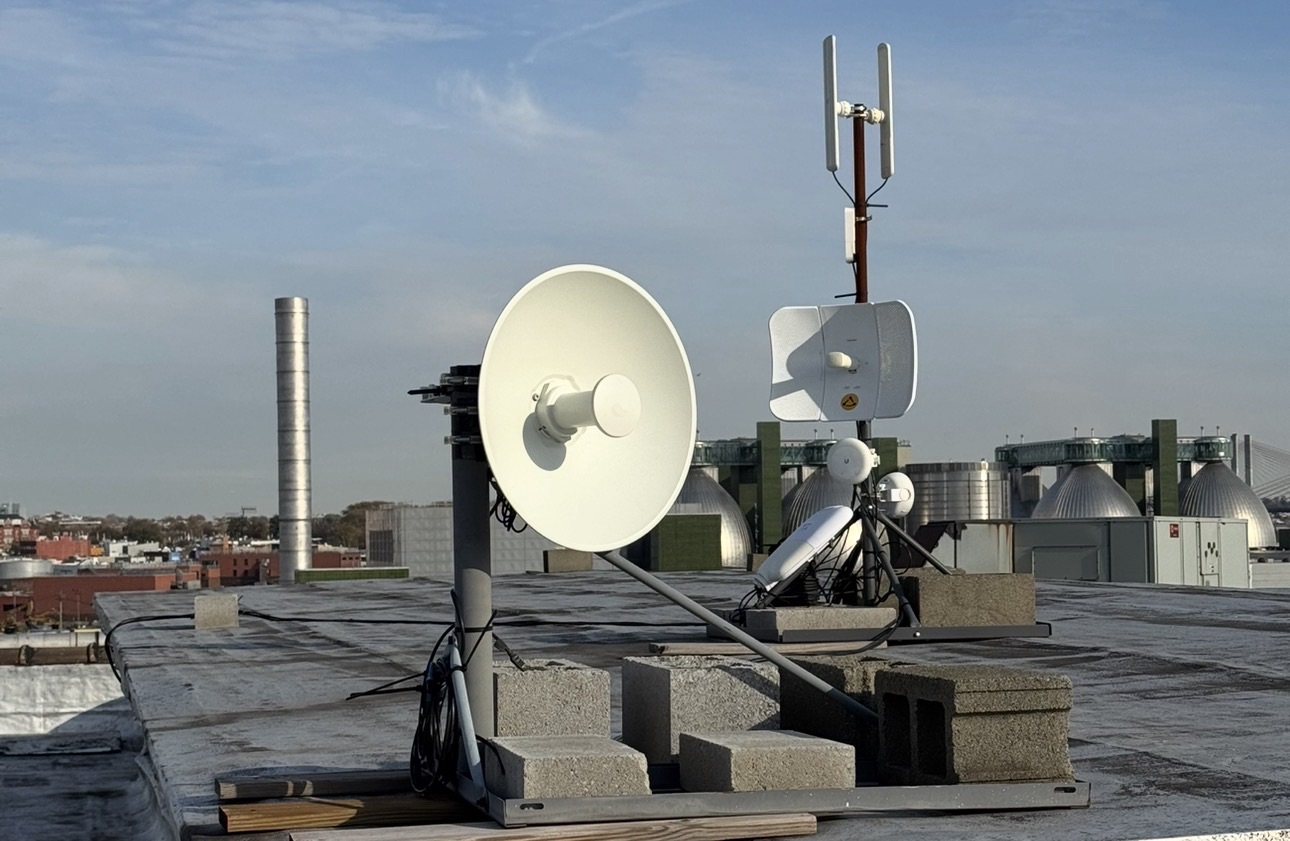
It started with sneaking up onto the Jefferson roof. I was attempting to fix ‘disturbed’ antennas that were affecting my signal. Vandalism from pigeons and people. Now a problem of the past, this became the instigating moment where taking ownership of a hub started the path that would follow.
The next few years I found myself building a variety of small hubs, intended to offload larger Vernon & Saratoga. Providing a high-speed backbone that enabled nodes to connect more efficiently and at scale, rather than pressing the easy button and pointing everything at those tall monsters. Converting our hub and spoke layout into messy triangles of redundancy. Eventually, coining the title ‘Mayor of North Brooklyn’.
Many times this was a passive upgrade, where the node already existed, or some degree of a hub was present, but not at the extent of being a local community enabler. Starting with a roof that is proven and not expected to shut down or move, removes guesswork about where to place effort. Jefferson, Hex House, Eldert, Wilson, & Goodwin each came from an existing baseline. Thames too, seeding my node into a personal hub.
In other cases, creating a new hub was a tactical enabler to seed a neighborhood and ensure quality service for members from day one. This is the story of Leonard, Monroe, & Maspeth, where each had a different challenge to solve, and a cheerleader who empowered Mesh to put something on their roof. Providing credibility that it would stand long enough to build support for the neighborhood to expand.
Freeman stands unique. An urgent call to ensure Greenpoint remains stable after a series of problems that made the neighborhood an isolated island of connectivity loss. A film studio came to our rescue, and we were able to implement a hub within a day to solidify trust in mesh. ‘Hub in a day’ became a recurring theme, with prep ensuring a build could be completed with minimal volunteers in a short time. This was a major step in converting Greenpoint to be part of Brooklyn, still a satellite territory of Manhattan on the network map.
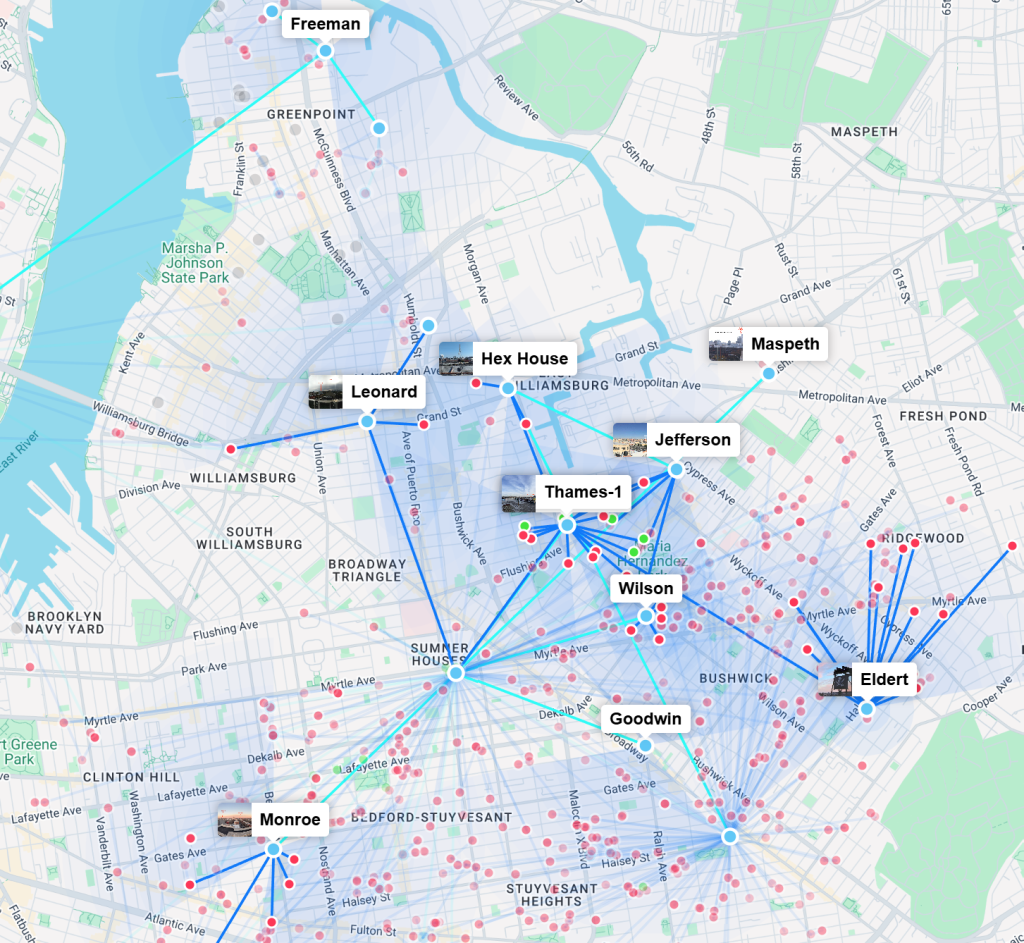
Each of these hubs has a unique story that influenced their respective buildout. A unique set of antennas, routers, masts, and benefit to the surrounding area.
Hex House, a roof shaped by a line of disparate antennas, each mirroring the far end at a large hub, offers a last ditch path back to the datacenter through VPN links. This highly industrial area was something of the ‘edge of Brooklyn’ for a long time, guiding packets home if the mesh becomes segregated.
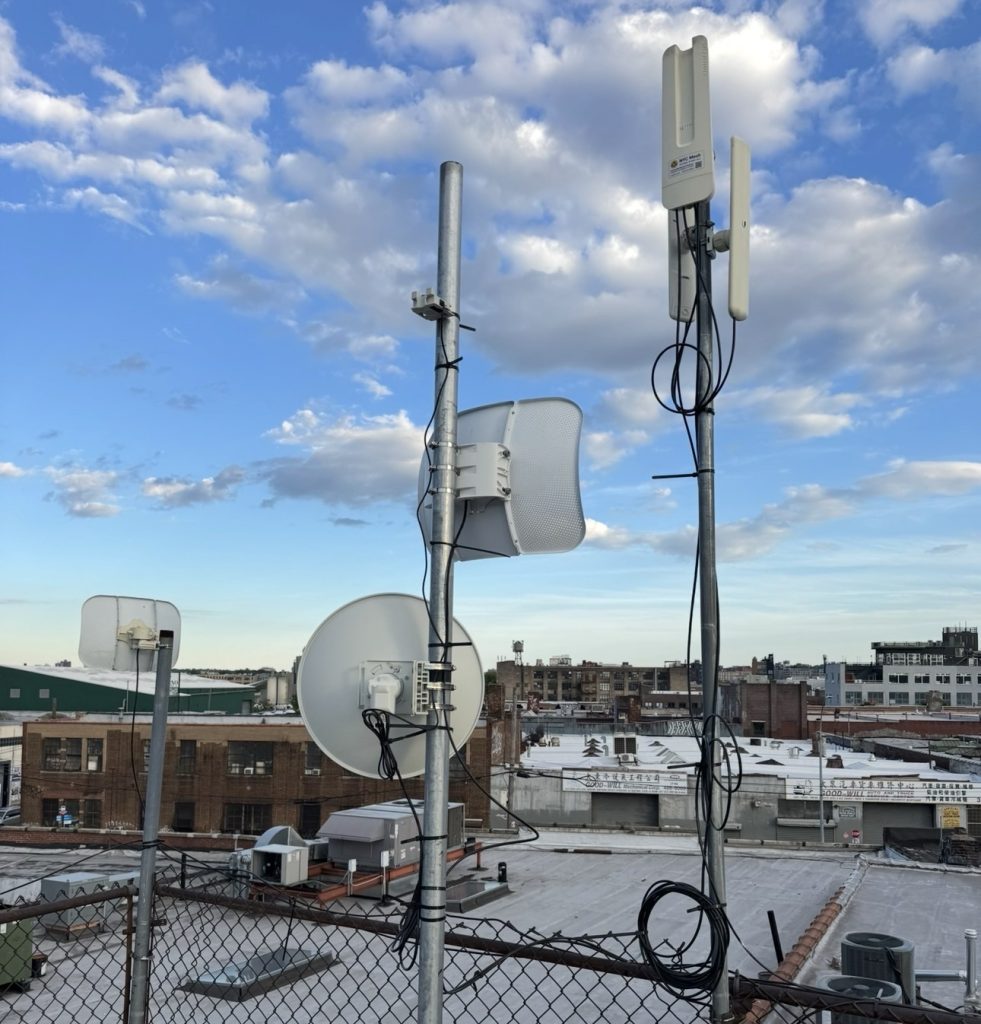
Thames, the rooftop of an abandoned warehouse, with an easy ability to test new technologies, and a clear shot to Vernon. Now seeding the neighborhood with many nodes benefiting from 4 layers of redundancy.
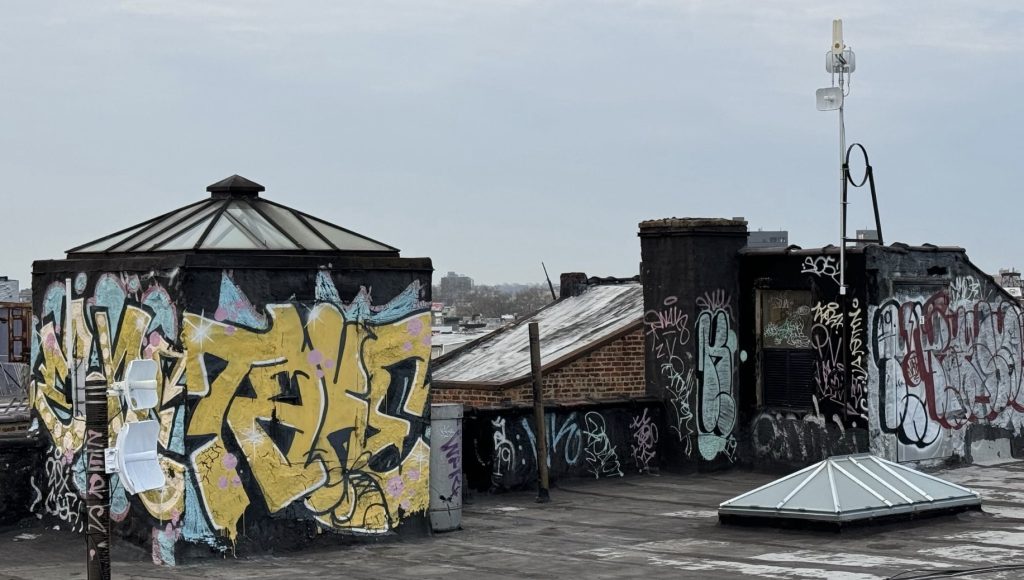
Leonard, the connector of neighborhoods, with Greenpoint, Williamsburg, Bushwick, & Bedstuy all within reach. A prior dead zone for mesh, with limited members and cross connects before its construction.
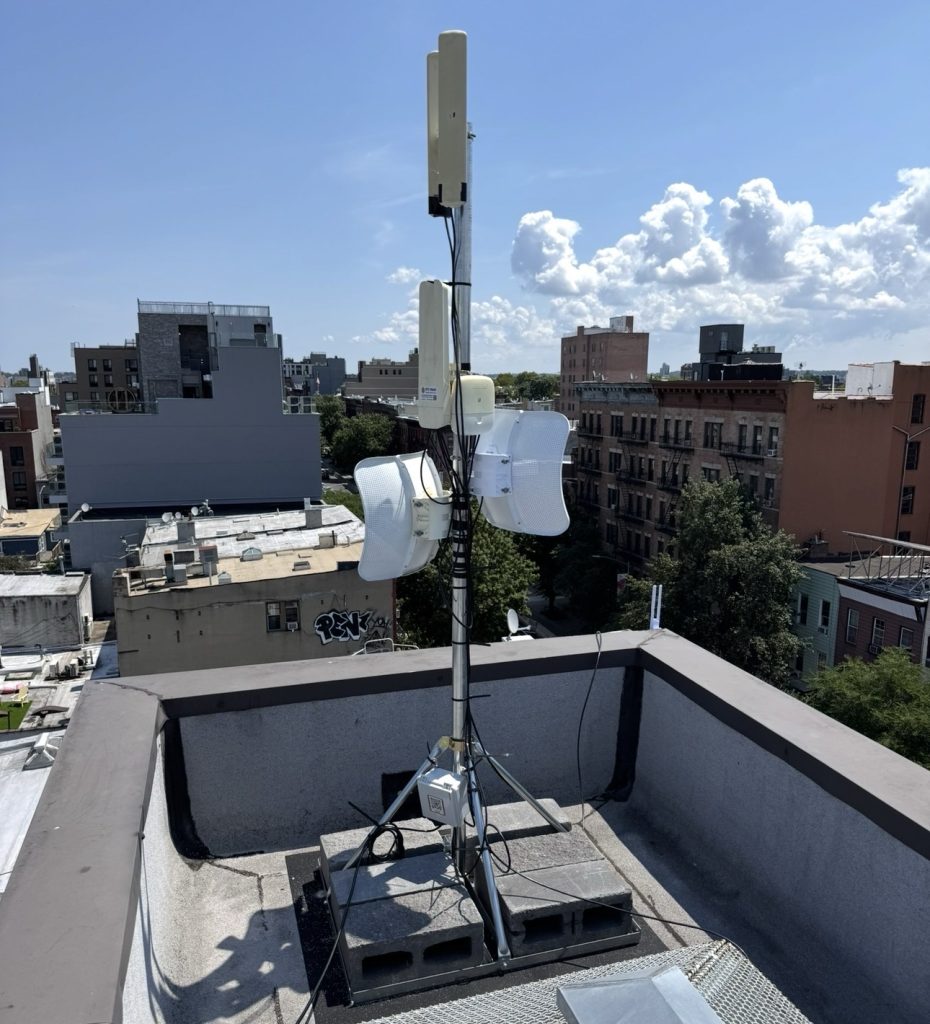
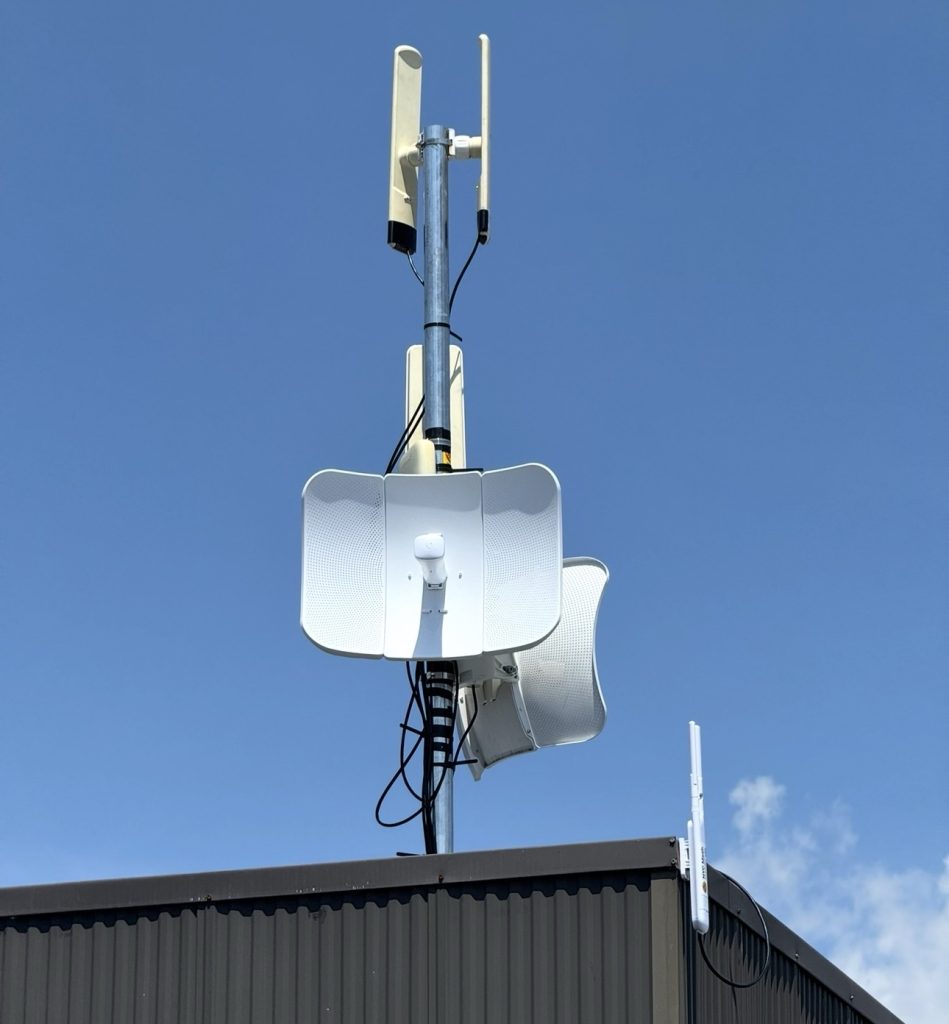
Monroe & Goodwin, offering alternative connection points in areas with high amount of 5ghz congestion, in some of the most dense areas of the mesh. Bringing 60 & 6 GHz of speed directly to members.
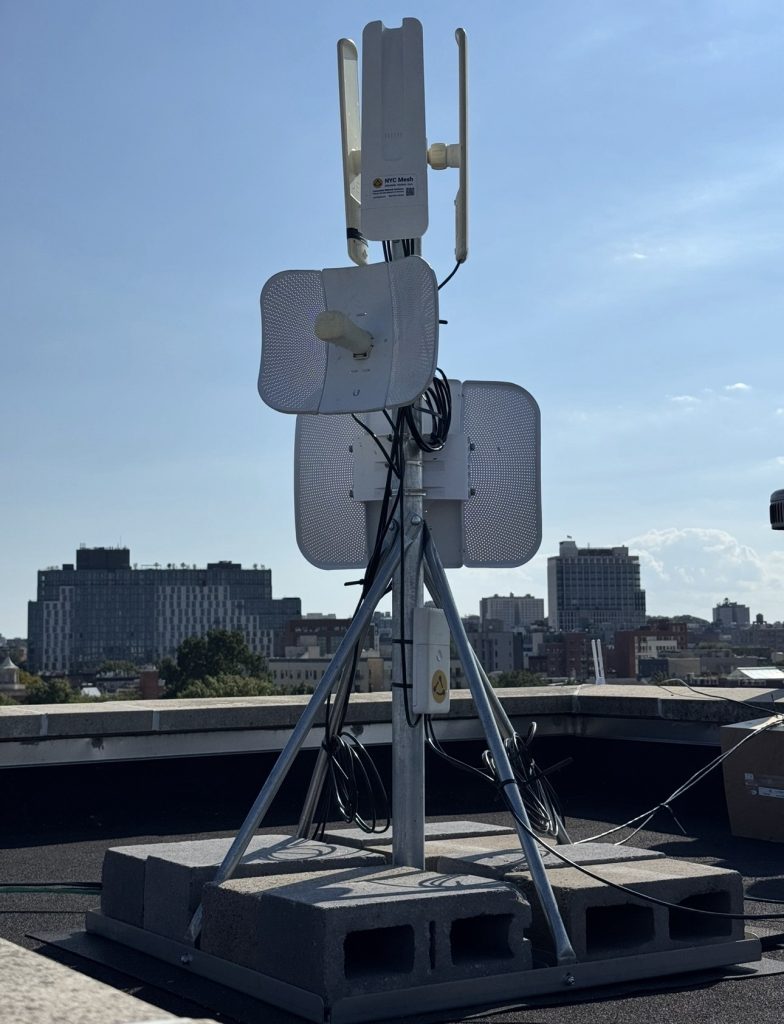
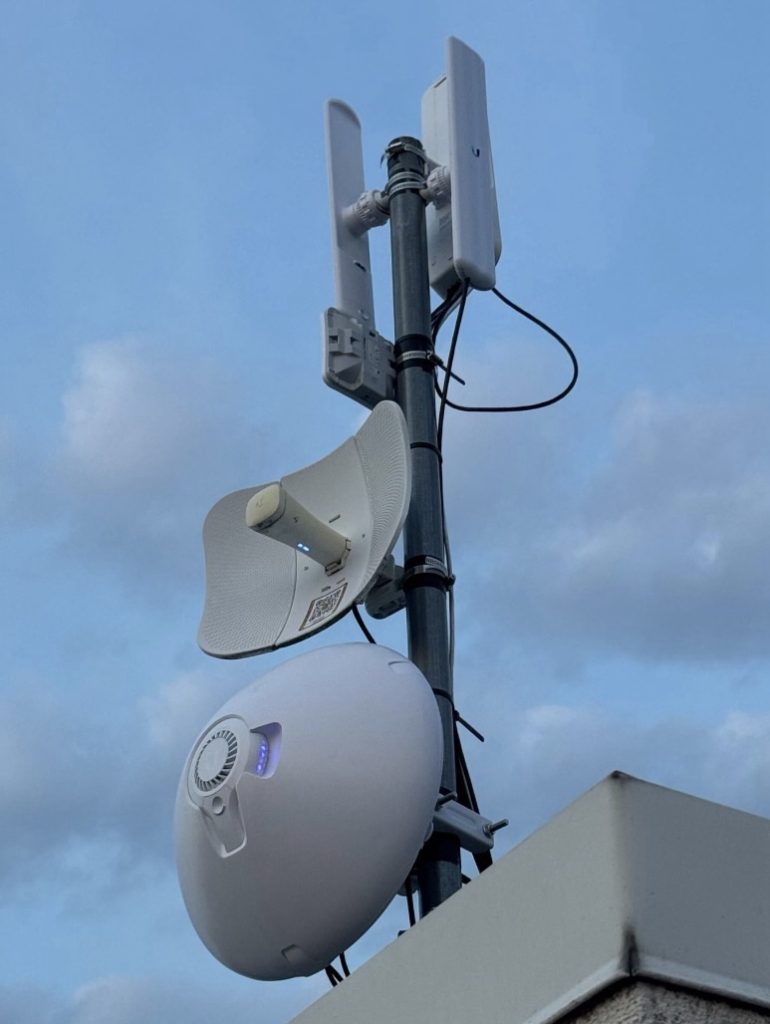
As the mesh continues to grow, I see a path headed deeper into Maspeth. Outside of maintenance, my focus will turn to pushing north, through the canals, parks, and elevated terrain. Pay attention to #n-queens in 2026
A bit more on